$25, includes transportation, a tour, and a box lunch.
This tour is underwritten by the Topaz Museum.
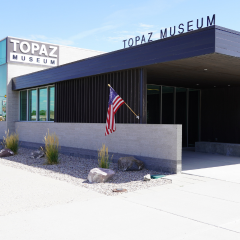
Join us for a day of reflection and learning as we travel to the Topaz Museum and the historic site of the Topaz War Relocation Center in Delta, Utah — a place that holds one of the most sobering chapters in American history: the imprisonment of people of Japanese ancestry during World War II.
Our destination is the Topaz Museum, which shares the stories of the 11,000 people of Japanese descent who were unjustly accused of threatening national security and confined at Topaz during World War II. Through hundreds of artifacts, photographs, oral histories, and original artwork, the museum's core exhibit traces the full arc of the Japanese American incarceration experience — from the racist laws that marginalized early Japanese immigrants, through the traumatic upheaval of mass removal, to the Constitutional violations that incarcerees were forced to endure. The museum invites visitors to engage with these personal stories and to recognize the protection of civil liberties as a shared responsibility — and a shared history.
From the museum, we will travel to the Topaz site itself, passing through Delta to see barracks and hospital wings that were moved from the camp after it closed in 1945 and continue to be used as houses. Once at the site — a mile-square expanse of high desert 16 miles northwest of Delta, designated a National Historic Landmark in 2007 — the landscape tells its own story. Outlines of barracks, rock gardens, and pathways remain etched into the dusty desert beneath the greasewood. The original barbed wire fence still stands. At its peak, Topaz was the fifth-largest city in Utah; today, visitors walk the same ground where more than 11,000 people built lives under extraordinary constraint.
Note: The bus ride between Salt Lake City and Delta is approximately 2 to 2.5 hours each way, offering ample time to connect with fellow attendees. The Topaz site is outdoors on open, unpaved terrain in an arid desert environment and is not ADA accessible. Attendees should wear sturdy, closed-toe shoes and dress in layers. Hats, sunglasses, and sunblock are recommended. Please do not remove any artifacts from the site, and watch for rusty nails and prairie dog tunnels. The tour will proceed rain or shine.