In the 1920s, over the course of four years, amateur archeologist Hans Hornbostel, took from Guam and the Commonwealth of the Northern Mariana Islands, more than 10,000 artifacts, transporting them to the Bishop Museum in Hawai’i. This massive collection of artifacts belonging to the indigenous people of the Marianas, the Chamoru, were kept locked away in cabinets for more than a century, with little research and few pieces ever being exhibited at the museum.
When I first started working as the Curator for the Guam Museum, the oldest and largest museum in the Western Pacific, five years ago, one of my priorities was to work to initiate the repatriation of this collection. Through working with the Ethnology Department at the Bishop Museum, we began to negotiate the return, which would take place in multiple waves. The first wave happened in 2025; the second wave just took place in October 2026. The third and final wave is scheduled for 2027.
This is one of the largest artifact returns to any community anywhere in the world and is historic. But since it is happening in the Pacific, and the Chamoru people are a Pacific Islander groups whose numbers globally are 200,000, it has received little attention nationally or internationally. For Pacific Islanders, in general and inclusive of those politically tied to the United States, there is a constant struggle between invisibility and hypervisibility. Your numbers are small, your islands are far away. It is easy for most in the United States to forget that islands such as Guam and the CNMI are unincorporated American territories. But hypervisibility is also a limiting factor. When your existence can be too easily defined in narrow ways, as exotic paradises, US military bases, sites of natural disasters, then it is easy to another there that might be complicated or more nuanced.
This is exasperated by the length of travel to the United States (Guam to Los Angeles, takes two flights and a total flight time of 12 hours), and also the high cost. Air travel from Guam to the United States can range from $1,700 – 2,500 depending on your destination. This can make it difficult to attend conferences in the United States and join critical conversations about museum work and emerging trends. My presence at the 2026 WMA would not have been possible without the Wanda Chin Scholarship, which helped to defray the costs of travel. I am grateful to have received it and in general appreciate the opportunities it provides to others challenged by similar barriers.
By attending the 2026 Western Museum Association conference in Salt Lake City, I was able to take advantage of a rare opportunity to present the work we have been doing, directly to dozens of others working in museum and museum adjacent fields. I was also able to engage in productive conversations with other professionals from across the Western United States. While many conversations took place, the most substantive for me were those that focused on repatriation.
I had the chance to network and talk to those working on repatriation projects, both from communities seeking return, and from those working in museums who are navigating the ethics involved in returning cultural belongings. These questions came from those already actively doing the work, as well as those who know that repatriation is on the horizon, and wanted to how to best go about this critical work.
By chance, a session directly after my own, featured the team from the Museum of Us in San Diego. In 2026, the Guam Museum had worked with them through their Homeward Project, which is focused on community-driven repatriation projects from their extensive collection. I had a chance to listen to them and also speak during their presentation about our positive experiences working to with them to repatriate hundreds of artifacts back to Guam.
Overall, I felt that I offered an important perspective, since for many institutions in the United States, repatriation is determined by NAGPRA. But there are thousands of indigenous people around the world, including some who are politically tied to the US such as Chamorus, for whom NAGPRA doesn’t apply. By attending the conference, I gained much knowledge from the experiences of other museum professionals, but I also hoped I help broaden the understanding of the process of repatriation for some I spoke with. To remind them that restorative justice can take many paths and many forms, and cannot be left to NAGPRA to define alone.
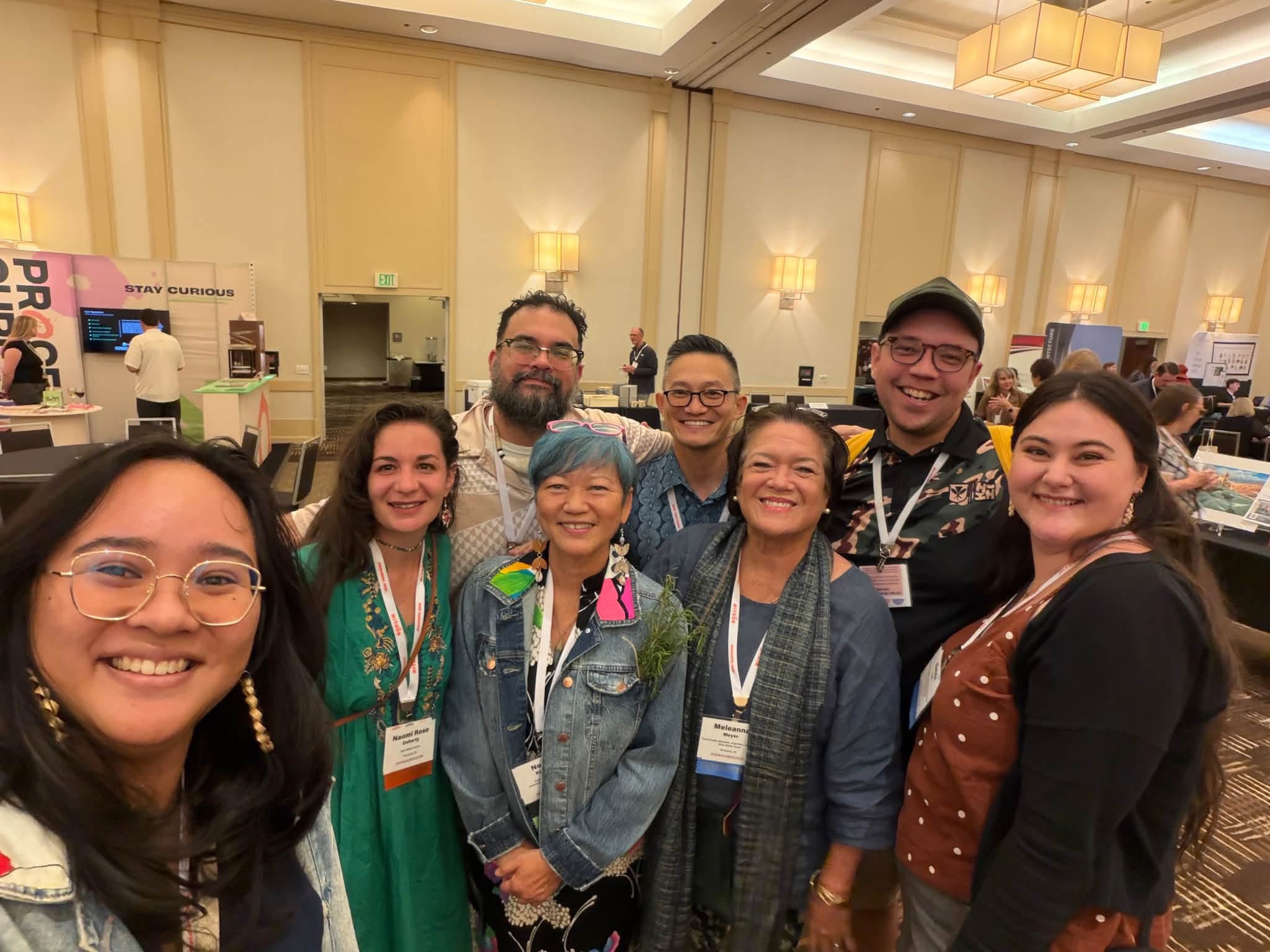
Overall, I felt incredibly fulfilled by my time at the 2026 WMA. The fact that I felt heard and seen, despite very few other Pacific Islanders in attendance, made the experience all the more meaningful. It was only a few days, but the intimate and community-based nature ensured that grounded conversations would take place. The type that has an impact, long after the conference is over and you are headed back to your institutions. I look forward to continuing these discussions at future WMAs!
Michael Lujan Bevacqua, Ph.D. (Familian Bittot yan Kabesa) taught Guam History and Chamoru language at the University of Guam for 10 years, runs a weekly podcast called Fanachu! and also serves as the co-chair for the decolonization education organization Independent Guåhan. With his brother Jack, they run a creative company called The Guam Bus that publishes Chamoru language books, comics and learning materials and offers free Chamoru language classes. He currently works as the curator for The Guam Museum, developing exhibits, educational programs and maintaining the museum’s collection which contains approximately 300,000 distinct pieces.
Add new comment