A Reason to Aspire: Finding Inspiration at WMA 2026
As a young professional entering the museum field, there are many opportunities to feel unsure of where things are going and how they will affect you in life. Whether that means difficulty finding opportunities for work, struggling to connect with the communities we serve, or even just finding ways to provide meaningful experiences for our visitors, there is no shortage of challenges to consider. After nearly four years spent balancing graduate school, internships, and museum work, I have seen and experienced a great deal of struggle and uncertainty, especially in recent years. However, in contrast with the anxieties and challenges our field has been experiencing, I have also had some incredible experiences where I saw truly inspirational institutions and met remarkable people who are redefining what it means to be a museum professional.
One such series of experiences took place at the Western Museums Association's 2026 Annual Meeting in Salt Lake City, Utah. Thanks to the incredible generosity of the Wanda Chin Scholarship Program, I was given the opportunity to expand upon my professional experiences at the small municipal museum where I work in Bernalillo, New Mexico, by learning from museum professionals across the country who are finding new and innovative ways to respond to the changing needs of the communities they serve. As an emerging professional, soon-to-be master's graduate, and small-town museum curator, the theme of ASPIRE, which so well defined this conference, was especially meaningful. Beyond being a truly memorable experience, the conference provided an invaluable opportunity to broaden my understanding of the museum field, develop new professional connections, and explore how the knowledge, ideas, and approaches shared by other institutions could be incorporated into my own work to strengthen the experiences we provide to our community.
One of my first experiences at the conference took place at Process Curiosity, where I attended the workshop, Exhibits 102: Prototyping for Exhibits, Organizational Culture, and Getting Unstuck. Having the opportunity to tour their workspace was fascinating in itself. Seeing the environment where creative ideas are explored, tested, and brought closer to reality offered a perspective that is not always easy to gain when working within the day-to-day demands of a smaller institution. But what made the experience particularly memorable was that we were not simply observing the work of others. We were encouraged to take part in the process ourselves.
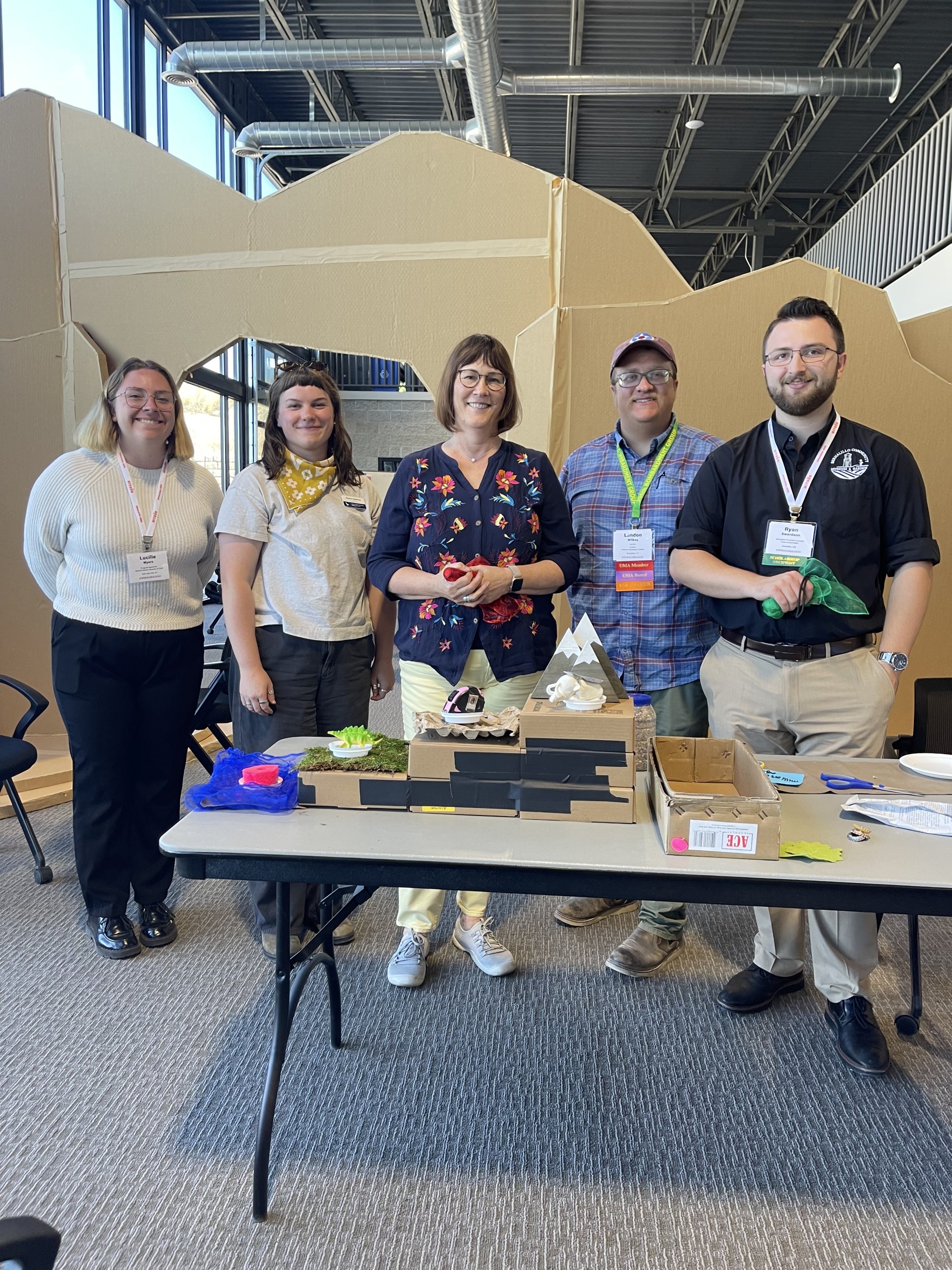
Through a collaborative project, I had the opportunity to work alongside museum professionals whose backgrounds and responsibilities were very different from my own. Our group was given a series of seemingly random assignments, challenges, and objectives that we were tasked with incorporating into the development of a hypothetical exhibition. As the project progressed, additional challenges were introduced, ranging from unexpected limitations to specific materials and concepts that we were required to incorporate into our designs. In our case, we were challenged to develop an exhibition that would appeal to audiences both young and old, explore geological history, incorporate an elephant, and provide meaningful experiences for visitors who engage with exhibits through sensory learning.
What followed was an incredibly entertaining and surprisingly creative exercise in collaboration and problem-solving. Drawing upon our different backgrounds and experiences, our group eventually developed the concept for an interactive exhibition centered around a woolly mammoth, incorporating elements of geological history, hands-on learning, and a variety of sensory experiences. Of course, bringing all these ideas together was not without its challenges, particularly when we began exploring some rather ambitious electronic and mechanical components that none of us seemed entirely certain how to make work. Nevertheless, between our enthusiastic attempts to figure out the technical details, some wonderfully impractical suggestions, and a great deal of laughter, we managed to develop a rather interesting exhibition concept that brought together the seemingly unrelated requirements we had been given.
Looking back, what made this experience so memorable was not necessarily the final product, but the process of getting there. Each person brought a slightly different perspective to the challenges before us, and it was incredible to see how quickly those different experiences could contribute to a shared idea. The experience also served as an important reminder that innovation does not always have to begin with an enormous budget, a new building, or an entirely new department. Sometimes it begins with a group of people willing to ask questions, experiment with unusual ideas, laugh at their mistakes, and build upon one another's creativity. For someone working in a small museum, where collaboration, adaptability, and creative problem-solving are often necessities, that was a particularly encouraging lesson to take home.
Another highlight of my time in Salt Lake City was the opportunity to visit the Museum of Utah. Having worked in several museums throughout my professional career, including the National Museum of Nuclear Science & History, I have developed a considerable appreciation for the amount of planning, resources, and dedication required to develop exhibitions and maintain historical collections. Even with these experiences, however, I was not fully prepared for just how impressive the Museum of Utah would be. From the remarkable quality of its exhibitions to the professionalism of its staff and the extraordinary facilities constructed to house and preserve the state's historical collections, nearly every aspect of the museum left a lasting impression on me.
The exhibitions themselves were incredible, not simply because of their visual presentation, but because of the thoughtfulness with which they brought together the many different stories that have shaped Utah's history. The integration of historical objects, engaging displays, and modern interpretive approaches demonstrated just how powerful an exhibition can become when historical scholarship and creative design are brought together. Yet, as impressive as the public galleries were, what truly amazed me was the opportunity to explore the museum's behind-the-scenes operations, particularly its collections storage facilities and preservation laboratories.
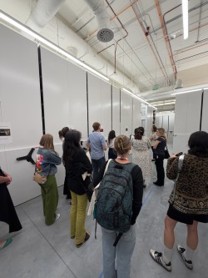
Having spent a considerable amount of time working with historical collections, archival materials, and preservation projects, I was absolutely fascinated by the sheer scale and sophistication of the museum's collections storage facility. The amount of space dedicated to the preservation of historical materials, the quality of the storage infrastructure, and the apparent level of planning that had gone into the development of the facility were unlike anything I had personally encountered. Equally impressive were the restoration and digitization laboratories, which demonstrated the extraordinary level of care and technical expertise that goes into preserving historical objects and making collections accessible for future generations. Having participated in collections management and digitization projects at institutions such as the National Museum of Nuclear Science & History, I found it especially interesting to compare the approaches, resources, and capabilities of the Museum of Utah with those I had encountered in my own work. Rather than simply being impressed by the size of the facilities, I was fascinated by the possibilities that such infrastructure creates for the long-term preservation, study, and interpretation of historical collections.
Equally memorable were the museum's staff members, whose professionalism, knowledge, and genuine enthusiasm for their work made the experience all the more meaningful. Throughout the visit, I was struck by their willingness to share their expertise, explain the reasoning behind different aspects of their operations, and engage with visiting museum professionals. It was clear that the extraordinary quality of the museum was not simply the result of substantial resources or modern facilities, but also the dedication and collaboration of the people responsible for bringing everything together. Their willingness to engage with us was an important reminder of just how valuable these professional exchanges can be, particularly for emerging professionals seeking to learn from institutions with different experiences and capabilities.
Looking back, what made the Museum of Utah such an inspirational experience was the opportunity to see what can be accomplished when ambitious institutional planning, dedicated professionals, and a commitment to historical preservation come together. While the size and resources of the museum are far beyond what many smaller institutions could realistically hope to replicate, the principles behind its success are not. The emphasis on thoughtful collections care, innovative interpretation, professional collaboration, and long-term planning are qualities that museums of every size can aspire to. For me, the experience was not simply an opportunity to admire an extraordinary new institution, but a chance to reconsider what might be possible within my own work and how even smaller improvements in our facilities, practices, and approaches can contribute to something much greater over time.
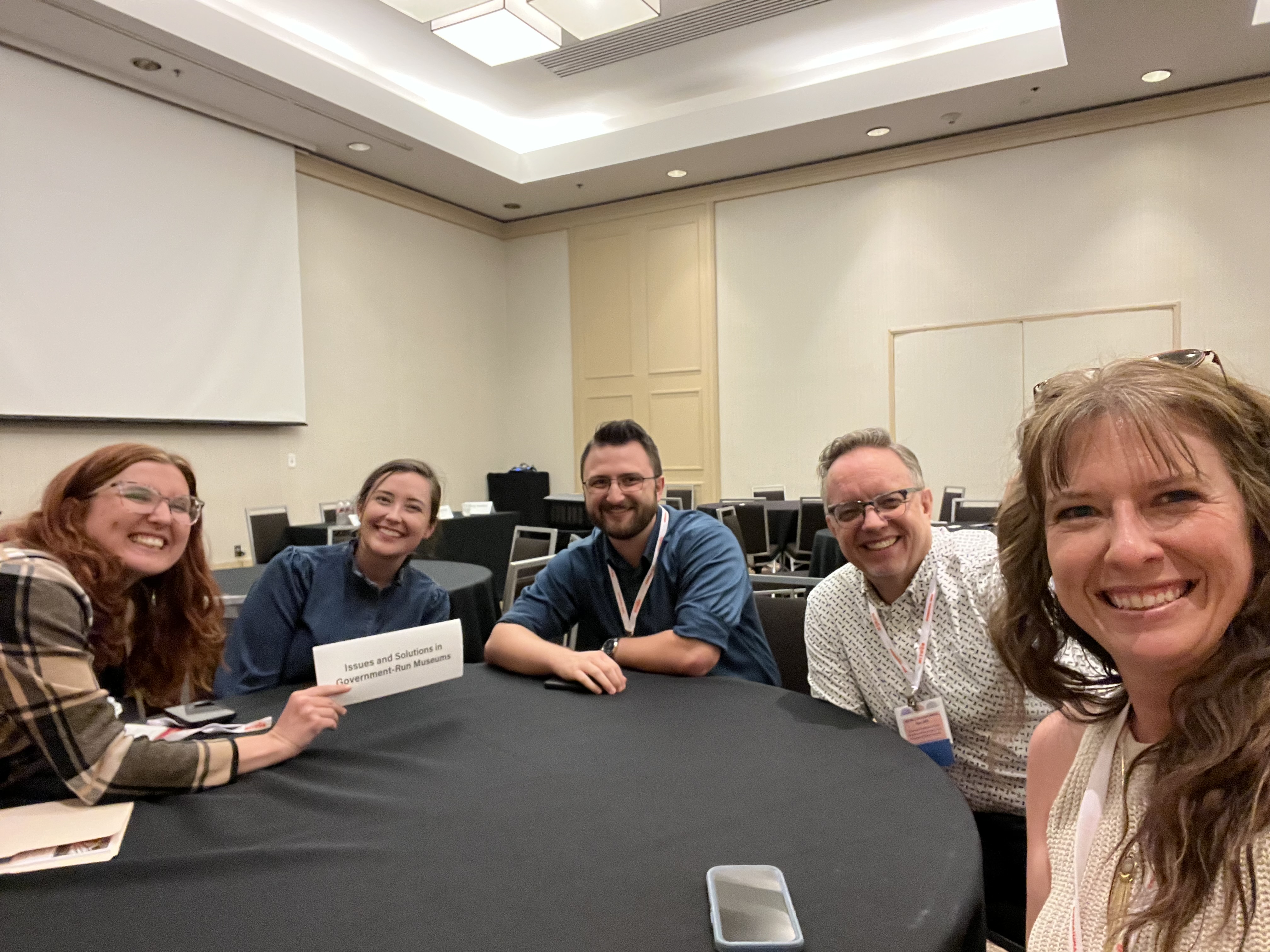
Of course, not every memorable experience at the conference involved a large facility or an elaborate exhibition. Some of the most valuable conversations took place in much smaller settings. I was particularly grateful for the opportunity to participate in Hope Eggett's roundtable, Issues and Solutions in Government-Run Museums. As someone employed by a municipal museum, I found it reassuring to sit down with other professionals who understand the unique opportunities and difficulties that can come with working within local government. Our conversation touched on issues surrounding funding, politics, institutional priorities, and the different expectations that our audiences bring into museum spaces.
These are not always easy subjects to navigate. Museums have a responsibility to the histories and communities they serve, while government-run institutions must also operate within public budgets, administrative structures, and sometimes changing political circumstances. Hearing how others were working through these challenges reminded me that many of the concerns we face are not unique to one institution or one community. I did not walk away with a simple answer to every issue, but I did come away with a greater appreciation for the value of sharing experiences with people who understand the circumstances of our work.
The conference also gave me a great deal to think about regarding artificial intelligence and the technological innovations beginning to reshape the museum field. These developments are exciting, especially for smaller institutions seeking new ways to improve access to collections, connect with audiences, and make better use of limited resources. At the same time, I believe we have to be thoughtful about how we approach them. The goal should never be to replace the knowledge of historians, the creativity of artists and exhibit developers, or the relationships that exist between museums and their communities. Rather, it should be to explore where these new tools can genuinely support that work, while remaining transparent about their limitations and committed to historical accuracy and human judgment.
Looking back, what made these experiences so valuable was not simply seeing what other museums have accomplished, but being able to consider what parts of those accomplishments might be possible within my own work. A collaborative exercise at Process Curiosity, a behind-the-scenes tour at the Museum of Utah, and a conversation with fellow government museum professionals were all very different experiences. Yet each reinforced the same idea: the strength of our field lies in our willingness to learn from one another, try new approaches, and remain focused on the people and histories we serve.
As I return to my work in Bernalillo and prepare for the next stage of my professional career, I find myself thinking about how to turn that inspiration into something meaningful. How can we create new opportunities for community involvement? How can we improve the ways we preserve and share our collections? How can we make room for experimentation while protecting the integrity of the stories entrusted to us? I certainly do not have all the answers, but I have come home with a renewed desire to ask those questions and pursue the possibilities they represent.
I am incredibly grateful to the Western Museums Association, the Utah Museums Association, the Wanda Chin Scholarship Program, and the individuals who made this opportunity possible. For emerging professionals, particularly those working in small institutions, experiences like this provide more than a chance to attend a conference. They offer an opportunity to see what others are building, learn from their challenges, and become part of a much larger professional community. I know the uncertainties facing museums will not disappear overnight. But having seen the creativity, generosity, and determination of the people working to move our field forward, I left Salt Lake City with a renewed sense of purpose and, perhaps most importantly, a reason to aspire to something greater.
Ryan Swardson is an emerging museum professional currently serving as the Education and Outreach Curator at the Town of Bernalillo Community Museum in New Mexico. He is pursuing a Master of Arts in American History with a graduate minor in Museum Studies and Administration at the University of New Mexico. Throughout his professional career, Ryan has gained experience in collections management, archival preservation, exhibition development, and public engagement at several museums and cultural institutions. He is passionate about preserving history, strengthening community connections, and exploring innovative approaches to making museums more accessible and engaging for future generations.
Add new comment